manifold
adjectiveDefinition
What Makes This Word Tick
Manifold means diverse or varied, pointing to many forms, angles, or parts rather than just one. It suggests richness and multiplicity—more than a simple list, more like a set of possibilities. Compared with various, manifold often feels fuller and more layered.
If Manifold Were a Person…
Manifold would be the person who never offers only one explanation—they arrive with a whole bundle of perspectives. They’re curious, branching, and hard to pin down to a single lane. Talking with them feels like opening a door to a room with many rooms inside it.
How This Word Has Changed Over Time
Manifold has kept its central sense of “many and varied,” and it still tends to sound slightly formal. It’s often used when the variety matters—interpretations, causes, effects—where “more than one” isn’t strong enough. The meaning stays stable because the “manyfold” image is built into the word.
Old Sayings and Proverbs
A proverb-style idea that matches manifold is that truth can have more than one face, depending on where you stand. That fits the definition because manifold highlights variety and multiple forms.
Surprising Facts
Manifold often appears with abstract nouns—reasons, ways, meanings—because it’s great for describing complexity. It doesn’t just mean “several”; it suggests a spread of different kinds. The word can make writing feel more panoramic by hinting at breadth without listing every item.
Out and About With This Word
You’ll see manifold in essays, reviews, and thoughtful commentary where someone wants to stress that a subject has many aspects. It’s common when describing interpretations, consequences, or influences that branch in multiple directions. The word fits best when the variety is meaningful, not just a random assortment.
Pop Culture Moments Where Manifold Was Used
In pop culture, the idea behind manifold shows up in stories with layered mysteries, multiple viewpoints, or plotlines that reveal different meanings depending on who’s speaking. That reflects the definition because the experience is varied rather than single-track. The concept helps explain why some stories invite more than one reading.
The Word in Literature
In literary writing, manifold is often used when authors want to emphasize depth—many interpretations, many motives, many effects rippling out. It gives a sentence a sense of intellectual breadth without turning into a list. For readers, it signals that the subject won’t be captured by one simple explanation.
Moments in History with Manifold
Historically, the concept of manifold applies to events with multiple causes and varied outcomes—situations where no single factor explains what happened. It fits the definition because history is often shaped by diverse influences that intersect and multiply. The word helps frame complexity without claiming one neat, complete story.
This Word Around the World
Across languages, this idea is usually expressed through words meaning “varied,” “multiple,” or “many-sided,” sometimes with a more formal register. Expression varies, but the sense stays the same: diversity of form or aspect, not just quantity.
Where Does It Come From?
Manifold comes from an Old English form meaning “manyfold,” built from elements meaning “many” and “fold.” The origin matches the modern meaning closely: something folded into many forms or aspects.
How People Misuse This Word
Manifold is sometimes used when people only mean many, but it’s best when the meaning is varied or diverse, not just numerous. If the items are all the same kind, several or many may be clearer.
Words It’s Often Confused With
Manifold is often confused with multiple, but multiple emphasizes number while manifold emphasizes variety and many-sidedness. It can also overlap with various, though various can be casual, while manifold often feels more weighty and layered. Numerous is different because it focuses on count, not diversity of kind.
Additional Synonyms and Antonyms
Additional Synonyms: many-sided, multifaceted, diverse Additional Antonyms: uniform, single, one-dimensional
Want to Try It Out in a Sentence?
"The popularity of Dante's Inferno is partly due to the fact that the work allows for manifold interpretations."
Explore more words

nettle
[net-l]
to irritate, annoy, or provoke

downtime
[doun-tahym]
a period when something is not operational or active

apex
[ey-peks]
the tip, point, or vertex; summit

exert
[ex-ert-ert]
to put something into use

crime
[krahym]
an illegal act for which someone can be punished by the government

sartorial
[sahr-tawr-ee-uhl]
of or relating to tailors or their trade

harass
[huh-ras]
to persistently trouble or annoy someone

irradiate
[ih-rey-dee-eyt]
to shed rays of light upon; illuminate

basilica
[buh-sil-ih-kuh]
a large church or building with a central nave and aisles, often used as a christian place of worship.
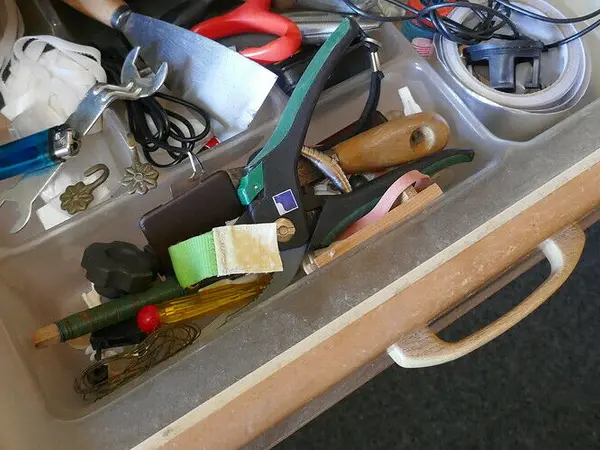
manavelins
[muh-nav-uh-linz]
miscellaneous pieces of gear and material

camaraderie
[kah-muh-rah-duh-ree]
mutual trust and friendship among people who spend a lot of time together

puerile
[pyoo-er-il]
childishly foolish, immature, or trivial

vivify
[viv-uh-fahy]
to give life to; animate; quicken

histrionics
[his-tree-on-iks ]
dramatic representation; theatricals; acting

interlay
[in-ter-ley]
to lay between; interpose

cradle
[kr-adl-e]
a small bed for an infant, often rocking; also refers to the act of gently holding or supporting something.