
crime
nounDefinition
What Makes This Word Tick
Crime names an act that violates the law and can be punished by public authority. It belongs to situations where wrongdoing crosses from private disapproval into formal legal consequence. The word suggests offense against rules backed by the state, not just personal bad behavior.
If Crime Were a Person…
Crime would be the figure who steps across a clearly marked line and leaves trouble behind. They are disruptive, consequential, and impossible to treat as a minor inconvenience. Their presence turns order into response.
How This Word Has Changed Over Time
The core meaning of crime has remained tied to acts treated as legal offenses. What changes over time is which acts a society defines that way, but the word itself stays centered on punishable wrongdoing.
Old Sayings and Proverbs
A proverb-style idea that fits crime is that hidden wrongdoing still carries a cost once uncovered. That matches the word because crime is bound up with both lawbreaking and consequence.
Surprising Facts
Crime is a broad word, but it sounds more formal and weighty than a simple wrong or mistake. It can cover many kinds of offenses while still signaling legal seriousness. That balance makes it central to law, news, and storytelling alike.
Out and About With This Word
You will encounter crime in law, news, policing, public debate, and stories built around investigation or justice. It fits any setting where unlawful acts matter socially as well as personally. The word is especially useful when rules and consequences are inseparable.
Pop Culture Moments Where Crime Was Used
In pop culture, the idea behind crime powers mysteries, courtroom dramas, detective stories, and moral thrillers. It works because audiences are drawn to the tension between violation, motive, and consequence. That makes the concept one of the strongest engines in modern storytelling.
The Word in Literature
In literature, crime can be more than a legal label. Writers use it to raise questions of guilt, justice, motive, and social order. The word helps link individual acts to wider systems of judgment.
Moments in History with Crime
The concept of crime belongs to historical moments when societies defined offenses, enforced laws, and argued over justice. It fits periods shaped by changing legal systems and public ideas of wrongdoing.
This Word Around the World
Across languages, this idea is usually expressed through terms for offense, unlawful act, or punishable wrongdoing. The exact legal boundaries differ, but the shared concept of lawbreaking with consequence is widely recognized.
Where Does It Come From?
Crime comes from Latin crimen, meaning accusation, charge, or offense. That origin suits the modern sense, which still binds wrongdoing to formal judgment and response.
How People Misuse This Word
People sometimes call any bad act a crime, but the word works best when the act is actually unlawful rather than merely rude or immoral. Legal status matters to its core meaning.
Words It’s Often Confused With
Wrongdoing is broader and may be moral rather than legal. Offense is close, though it can vary in seriousness. Sin belongs more to religious or moral language than to the legal sense carried by crime.
Additional Synonyms and Antonyms
Additional Synonyms: illegal act, breach, transgression Additional Antonyms: legality, rectitude, due conduct
Want to Try It Out in a Sentence?
"The detectives worked through the night to solve the crime."
Explore more words

charlatan
[shahr-luh-tn]
a person who pretends or claims to have more knowledge or skill than he or she possesses; quack

innate
[ih-neyt]
inherent in the essential character of something

deprecate
[dep-ri-keyt]
to express earnest disapproval of

inoculate
[ih-nok-yuh-leyt]
to implant (a disease agent or antigen) in a person, animal, or plant to produce a disease for study or to stimulate disease resistance

belabor
[bih-ley-ber]
to explain, worry about, or work at (something) repeatedly or more than is necessary

disrespectful
[dis-ri-spekt-fuhl]
showing a lack of respect

kiln
[kiln]
a furnace or oven for burning, baking, or drying something, especially one for firing pottery, calcining limestone, or baking bricks

quip
[kwip]
a sharp, sarcastic remark; a cutting jest

beseech
[bih-seech]
to implore urgently

open
[oh-puhn]
not closed or locked; accessible to others

beset
[bih-set]
to trouble or surround persistently

spurn
[spurn]
to reject with disdain; scorn

contrived
[kuhn-trahyvd]
obviously planned or forced; artificial; strained

marital
[mar-i-tl]
of or relating to marriage; conjugal; matrimonial

derisive
[d-er-is-iv-e]
expressing ridicule or mockery; scornful in tone or behavior.
intransigent
[in-tran-si-juhnt]
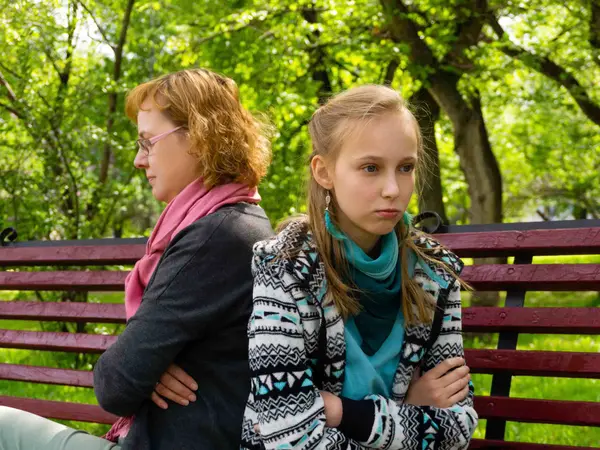
refusing to agree or compromise; uncompromising; inflexible