saga
VerbDefinition
What Makes This Word Tick
Saga points to a long, involved story or a stretched-out series of events that feels connected from start to finish. It often suggests scope—many parts, many turns, and enough time or detail for the whole thing to feel big. Unlike a simple story, a saga implies an extended arc that keeps unfolding.
If Saga Were a Person…
Saga would be the storyteller who can’t summarize because every chapter matters. They arrive with a stack of memories, side plots, and “wait, you have to know this part” energy. Being around them feels like stepping into a long hallway of connected scenes.
How This Word Has Changed Over Time
Saga has kept its core sense of an extended story, while expanding comfortably to cover real-life sequences of events as well as told tales. Modern usage still leans on the same idea: something long, involved, and linked together rather than a single moment.
Old Sayings and Proverbs
A proverb-style idea that fits saga is that a long journey is made of many connected steps. That matches the word because a saga isn’t one scene—it’s an unfolding chain of events that only makes sense when you see the whole stretch.
Surprising Facts
Saga often carries a hint of complexity: it suggests twists, setbacks, and developments that make the story feel layered. It can be used admiringly for sweeping tales or a bit wearily when the events feel never-ending. The word naturally signals “this has a lot of parts” without listing them.
Out and About With This Word
You’ll often see saga used in storytelling and everyday retellings when someone wants to emphasize that something took a long time and had many stages. It also fits descriptions of ongoing situations with repeated developments. The word works best when the length and connectedness are the point.
Pop Culture Moments Where Saga Was Used
In pop culture, the idea of a saga shows up in long-form storytelling where characters and conflicts stretch across many chapters and keep building on what came before. That mirrors the definition because the emphasis is on an involved sequence that feels bigger than a single episode.
The Word in Literature
In literature, saga is a useful label for narratives that prioritize continuity and accumulation—events stack up, relationships deepen, and consequences travel forward. Writers use the idea to create a sense of breadth and momentum, making readers feel they’re following a long connected arc rather than isolated scenes.
Moments in History with Saga
The concept of a saga fits moments where history is remembered as a chain of linked events rather than a single turning point—an extended sequence that people recount to make sense of outcomes. That matches the definition because the story becomes “long and involved” precisely due to how many connected steps it includes.
This Word Around the World
Many languages have everyday ways to express the idea of a long, involved story—often using terms that mean chronicle, epic, or extended tale. The shared concept is the same: a narrative (or event-chain) big enough to feel like it has chapters.
Where Does It Come From?
Saga comes from Old Norse saga, meaning “story” or “tale,” which neatly matches how the word still behaves today. The origin supports the idea that a saga is fundamentally a told account—just one that runs long and carries many connected parts.
How People Misuse This Word
Saga is sometimes used for any story, but it really earns its place when the tale is long, involved, and made of connected stages. If something is brief or self-contained, story or anecdote is usually a better fit.
Words It’s Often Confused With
Saga is often confused with epic, but epic leans toward grandeur or heroic scale, while saga emphasizes a long connected storyline. It can also be mixed up with chronicle, which suggests a more record-like telling, while saga often feels more narrative and unfolding.
Additional Synonyms and Antonyms
Additional Synonyms: tale, long-running narrative, extended chronicle Additional Antonyms: vignette, brief account, snapshot
Want to Try It Out in a Sentence?
"The family saga spanned three generations and told a story of resilience."
Explore more words

drowse
[drouz]
to be dull or sluggish

transpire
[tran-spahyuhr]
to occur, happen; take place

bilious
[bil-yuhs]
extremely unpleasant or distasteful

mosaic
[moh-zey-ik]
a picture or decoration made of small, usually colored pieces of inlaid stone, glass, etc.
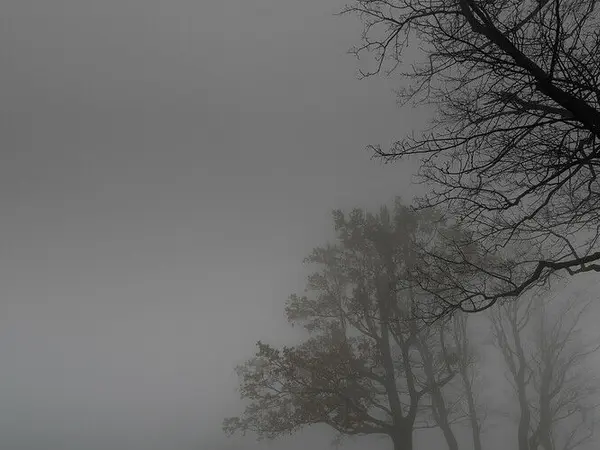
lugubrious
[loo-goo-bree-uhs]
mournful, dismal, or gloomy, especially in an affected, exaggerated, or unrelieved manner

alembic
[uh-lem-bik]
anything that transforms, purifies, or refines

kiln
[kiln]
a furnace or oven for burning, baking, or drying something, especially one for firing pottery, calcining limestone, or baking bricks

complacency
[kuhm-pley-suhn-see ]
a feeling of quiet pleasure or security, often while unaware of some potential danger, defect, or the like; self-satisfaction or smug satisfaction with an existing situation, condition, etc.
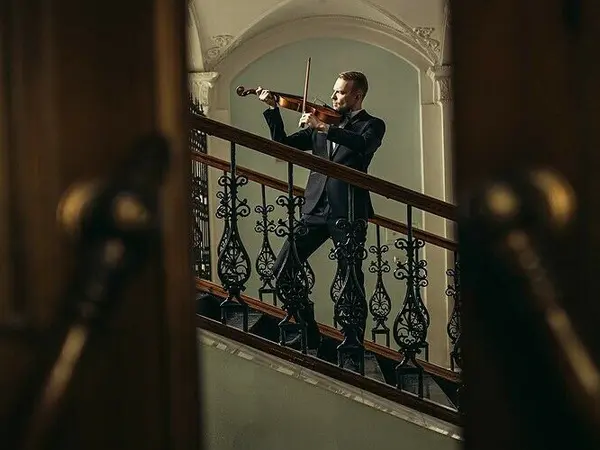
virtuoso
[vur-choo-oh-soh]
a person who has special knowledge or skill in a field
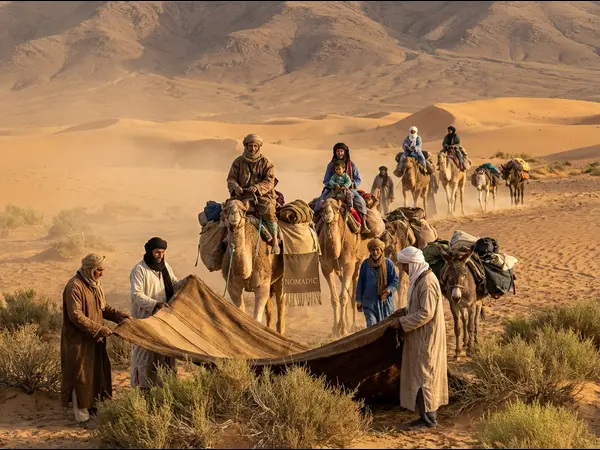
nomadic
[no-mad-dic]
wandering from place to place

legerdemain
[lej-er-duh-meyn]
sleight of hand; trickery

clairvoyant
[klair-voi-uhnt]
having or claiming to have the power of seeing objects or actions beyond the range of natural vision

nourish
[nur-ish]
to sustain with food or nutriment; supply with what is necessary for life, health, and growth

meritorious
[mer-i-tawr-ee-uhs]
deserving praise, reward, esteem, etc.; praiseworthy

hobnob
[hob-nob]
to associate on very friendly terms (usually followed by 'with')
admonish
[ad-mon-ish]
to caution, advise, or counsel against something