hegemonic
adjectiveDefinition
What Makes This Word Tick
"Hegemonic" might sound like a spell out of a fantasy novel, but it's actually a term that's all about power dynamics. This adjective describes dominance or leadership of one entity over others-influence with a capital "I." Whether it's used in the context of a cultural, political, or social setting, whoever is described as hegemonic is the one holding the reins-or trying to.
If Hegemonic Were a Person…
They'd probably be a persuasive leader with a charismatic smile, the kind of person who can sway groups with their ideas and assert their influence smoothly. Think of them as a natural-born leader who can't help but set the direction everyone else seems to follow.
How This Word Has Changed Over Time
Once a term mostly limited to heavy political discourse, "hegemonic" has broadened its horizons. Over the decades, it's been increasingly applied to cultural and social discussions, expanding from political dominance to include influence in media, education, and entertainment.
Old Sayings and Proverbs That Use Hegemonic
While no age-old proverbs feature "hegemonic" directly-that would be quite something-think of sayings like "the top dog" or "driving the bus," which capture a similar essence. It's all about being in the driver's seat.
Surprising Facts About Hegemonic
Despite its rather lofty connotations, "hegemonic" has a key role in pop culture critique, often used to analyze movies, advertising, and social movements. It might be one of the few words that traveled straight from academia into everyday conversations about who controls what we see on screen.
Out and About With This Word
You might spot "hegemonic" flexing its muscles in discussions around global politics, wielding its weight in debates about superpowers and international relations. It also shows up at cultural analysis gatherings, scrutinizing who sets societal norms.
Pop Culture Moments Where Hegemonic Was Used
"Hegemonic" pops up here and there in interviews and reviews when critiquing blockbuster films or discussing the music industry. It's that sophisticated word critics wield to highlight the power dynamics beneath the glittering surface.
The Word in Literature
While it might not be the star of any novel, "hegemonic" finds a home in essays, critiques, and academic papers. It's a darling among those parsing through texts that deal with themes of dominance and cultural production.
Moments in History with Hegemonic
Picture historical settings where one nation's culture reigned supreme over others-colonial eras, the Cold War, or even in the aftermath of world events where a single country emerged as a leader. "Hegemonic" is the backstage crew helping narrate these power plays.
This Word Around the World
Although "hegemonic" might not have direct equivalents in many languages, the concept is universal. It finds its parallel in words and gestures symbolizing dominance, whether in the corporate boardroom or on the international stage.
Where Does It Come From?
The roots of "hegemonic" dig back into the Greek "hegemonia," meaning leadership or command. It traveled through Latin into English, keeping its core sense of dominance all the while, which is quite fitting for a word that essentially means to lead or rule.
How People Misuse This Word
Some folks mistakenly use "hegemonic" just to mean "popular" or "trendy." But being trendy doesn't necessarily imply dominance. It's all about who's in charge, influencing actions or thoughts.
Words It's Often Confused With
- Dominant: Focuses on sheer power or control but lacks the cultural nuance.
- Popular: Suggests widespread use or appeal without implying control.
- Imperial: Carries a historical, political weight often tied to empires.
Additional Synonyms and Antonyms
For synonyms, consider "dominant," "leading," or "authoritative." Antonyms might include "subordinate," "inferior," or "unassertive."
Want to Try It Out in a Sentence?
"The studio's hegemonic influence on the film industry was evident, as nearly every other production company seemed to follow its lead in storytelling and casting."
Explore more words

comely
[kuhm-lee]
pleasing in appearance; attractive; fair

antisocial
[ant-is-ok-ial]
avoiding social interaction or behaving in a way that is harmful to society.

congeal
[kuhn-jeel]
to change from a soft or fluid state to a rigid or solid state, as by cooling or freezing

tomfoolery
[tom-foo-luh-ree]
a silly act, matter, or thing

intellectual
[in-tuh-lek-choo-uhl]
a person possessing a highly developed ability to think, reason, and understand; relating to the intellect

soporific
[sop-uh-rif-ik]
causing or tending to cause sleep

fragmentary
[fr-agm-ent-ary]
consisting of small, incomplete parts or pieces.

exert
[ex-ert-ert]
to put something into use

tiger
[tahy-ger]
a large, wild cat that lives in asia and usually has orange fur with black stripes

metronome
[me-truh-nohm]
a mechanical or electrical instrument that makes repeated clicking sounds at an adjustable pace, used for marking rhythm, especially in practicing music

frenzied
[fren-zeed]
wildly excited, enthusiastic, or agitated; frantic

spontaneous
[sp-ont-an-eous]
arising naturally or without premeditation; impulsive or unplanned.

renowned
[ri-nound]
celebrated; famous

ordinal
[awr-dn-uhl ]
of or relating to order, rank, or position in a series

glut
[gluht]
to feed or fill to excess; cloy
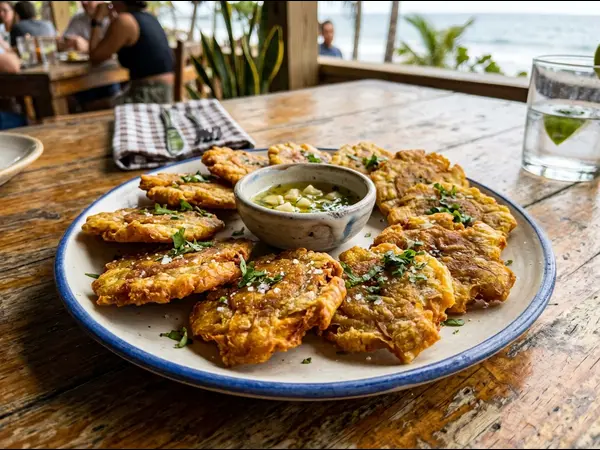
tostones
[toh-stoh-nehs]
thick slices of green plantain that are fried, flattened, and then fried again.